1957–1969: Opening the Space Age
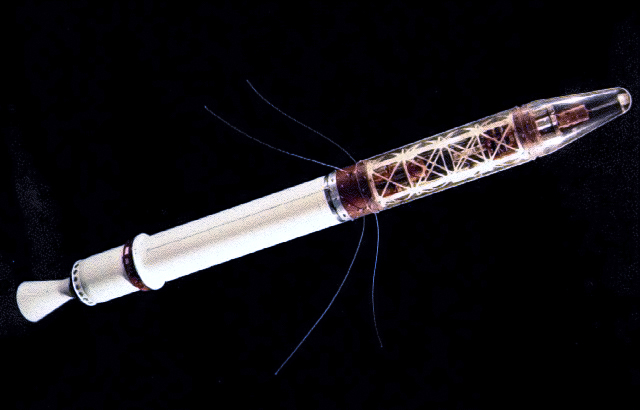
Explorer 1
First U.S. satellite; discovered the Van Allen radiation belts.
Era 1 of 6 · full record in the catalog
- Launch
- 31 Jan 1958
- Lead / partner
- United States
- Target
- Earth orbit
- Category
- Science / Earth orbit
- Status
- Success
- Vehicle
- Juno I
- Mass
- unknown
- Orbit / trajectory
- Geocentric orbit
- Duration
- 120 days (planned) 111 days (achieved)
Why it happened
Explorer 1 flew during 1957–1969: Opening the Space Age, as part of United States's work toward earth orbit. A sourced write-up of the context around this mission is still on the editorial queue; nothing here is invented to fill the gap.
The mission
The United States' answer to Sputnik, Explorer 1 reached orbit on 31 January 1958 after a failed first attempt months earlier. Its cosmic-ray detector, built by James Van Allen's team, returned data showing far fewer particles than expected. The instrument had saturated from an intense radiation belt, and that reading led to the discovery of what's now called the Van Allen radiation belts.
Results
First U.S. satellite; discovered the Van Allen radiation belts.
Related missions
Sources & image credits
- NASA, via Wikimedia Commons · Public domain · license: public-domain (source, checked 2026-08-24)
- Mission record: AntarikshPedia canonical dataset (data-sources/missions_timeline.md)
- Specifications reference: NASA NSSDCA Master Catalog
