1957–1969: Opening the Space Age
Sputnik 1
First artificial satellite; began the space age.
Era 1 of 6 · full record in the catalog
- Launch
- 4 Oct 1957
- Lead / partner
- Soviet Union
- Target
- Earth orbit
- Category
- Technology / Earth orbit
- Status
- Success
- Vehicle
- Sputnik-PS 8K71PS
- Mass
- unknown
- Orbit / trajectory
- Geocentric
- Duration
- 162 days
Why it happened
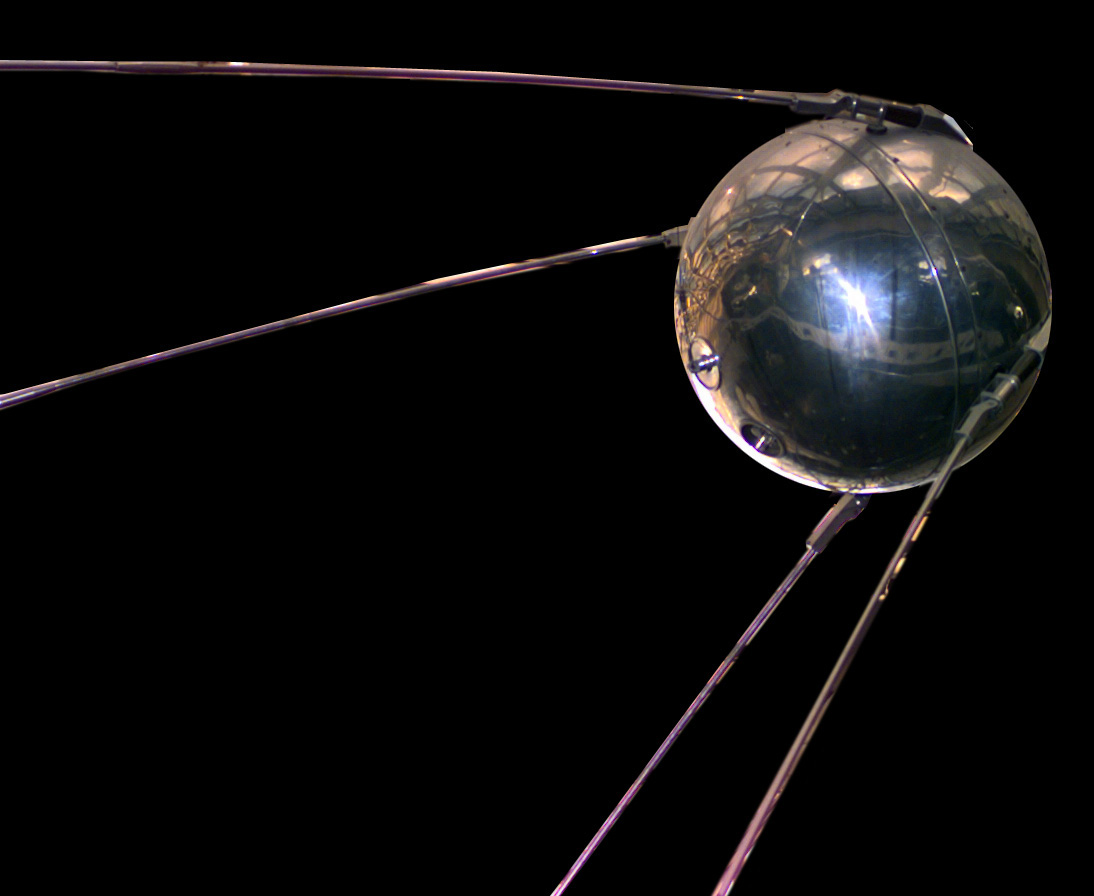
The Soviet Union had publicly committed to launching a satellite as part of the International Geophysical Year (1957–58). Two satellites were planned: Object D, a heavy scientific laboratory that kept slipping behind schedule, and a simpler probe that could be finished first. That simpler probe became Sputnik 1, an 83.6 kg polished aluminum sphere with four whip antennas and a radio transmitter, launched on an R-7 rocket adapted from the Soviet intercontinental ballistic missile program.
The R-7's existence was the real driver. The rocket that put Sputnik in orbit was built to deliver a thermonuclear warhead; the satellite doubled as a demonstration that the missile worked.
The mission
Sputnik 1 reached orbit on 4 October 1957. Its transmitter beeped at roughly 20 MHz for 21 days, until the batteries ran out on 26 October. Amateur radio operators, universities, and professional stations worldwide picked up the signal; the beeps were broadcast on radio and television.
The sphere burned up on re-entry on 4 January 1958, having completed about 1,440 orbits.
Results
First artificial satellite; began the space age.
Related missions
Sputnik 2
Partial success
Explorer 1
Success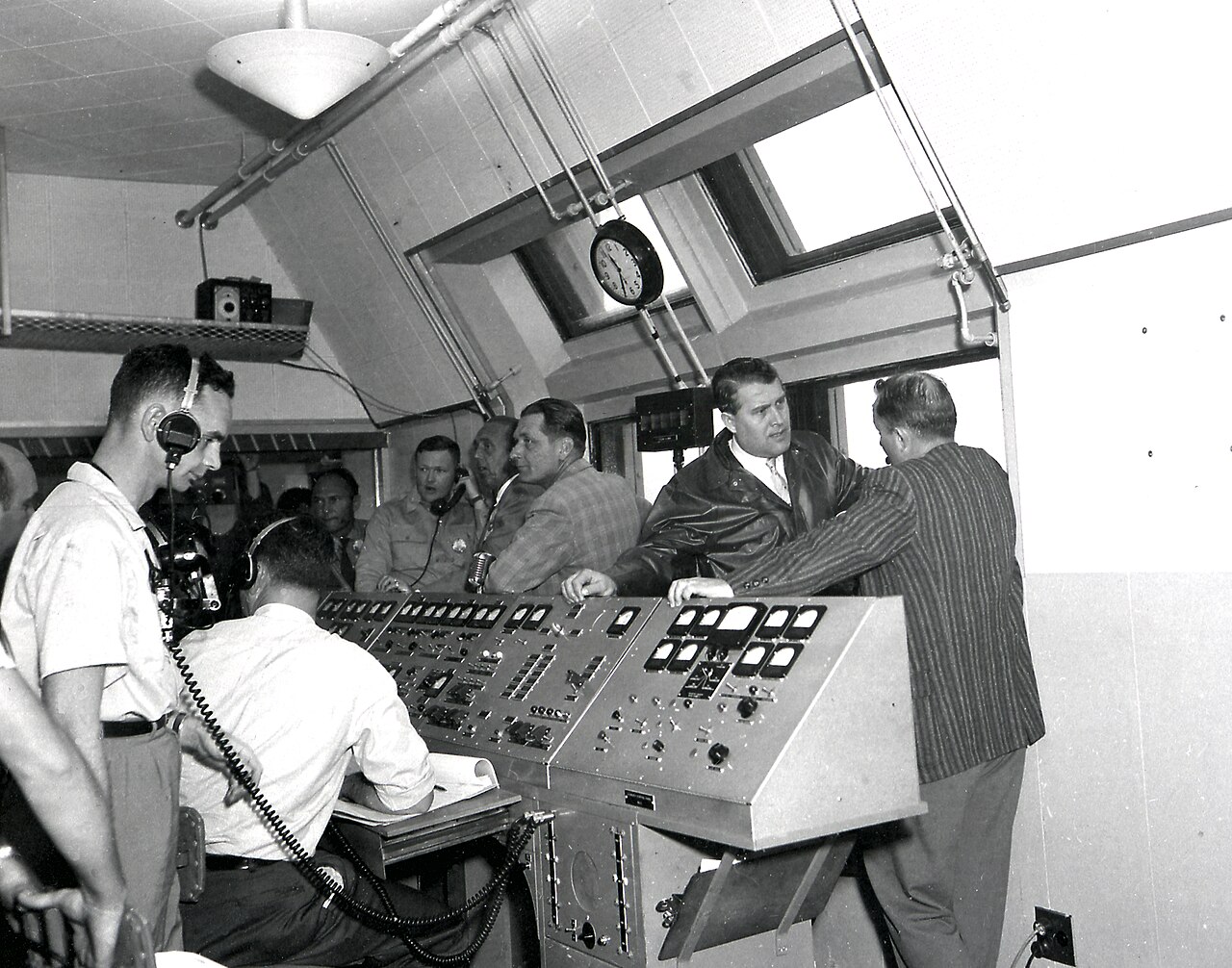
Explorer 3
Success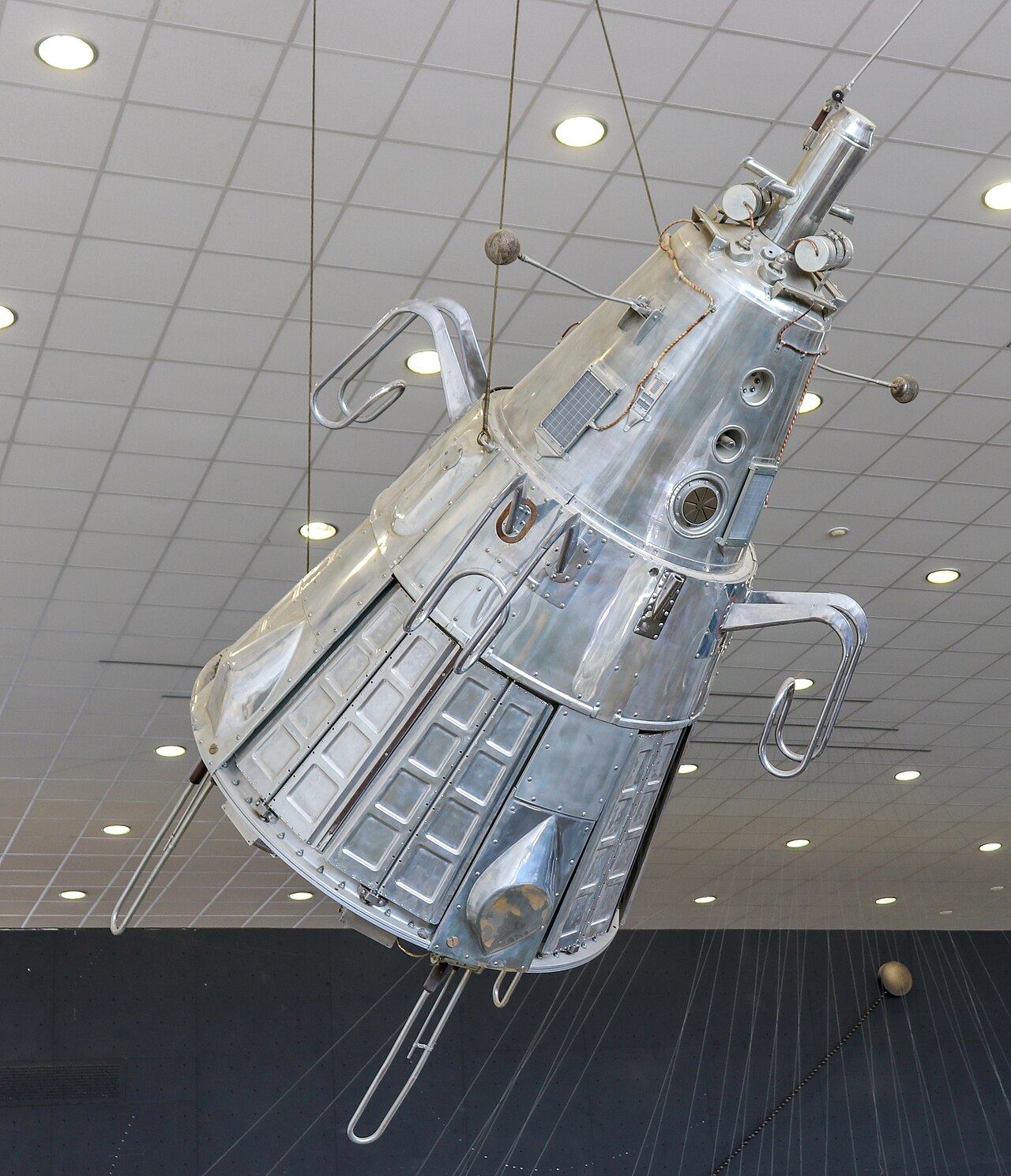
Sputnik 3 (Object D)
Partial successSources & image credits
- Image credit: NASA (NSSDC), via Wikimedia Commons · license: public-domain (source, checked 2026-08-22)
- Mission record: AntarikshPedia canonical dataset (data-sources/missions_timeline.md)
- Specifications reference: NASA NSSDCA Master Catalog
